Wide-format workflow guidanceFind application support
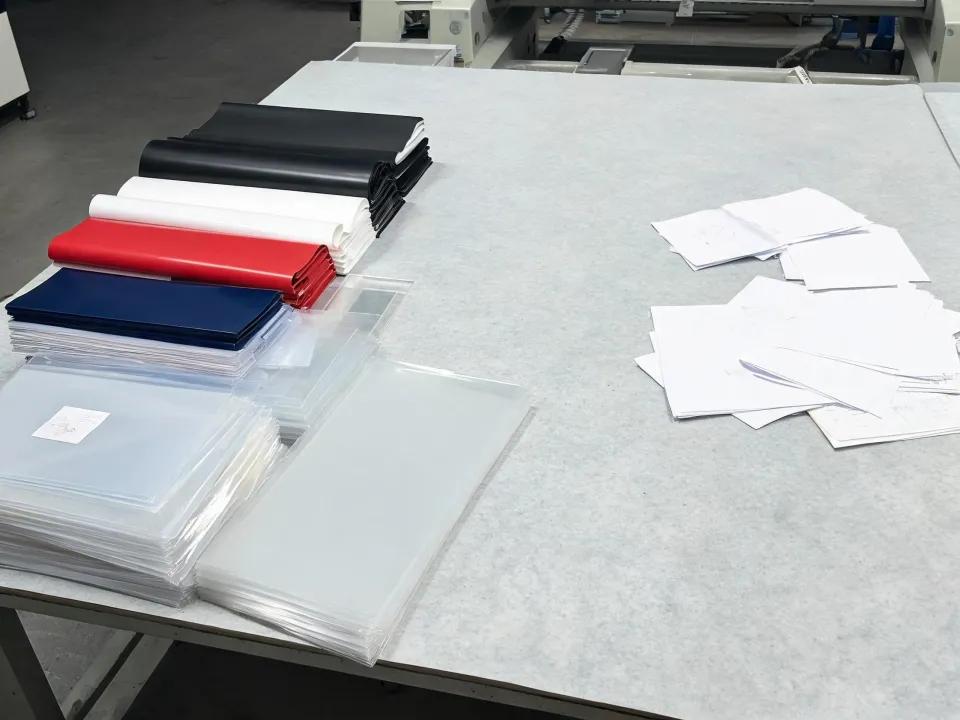
Unfinished print samples and separate production notes
Before the fit brief

Samples, settings and finishing facts live in separate places.

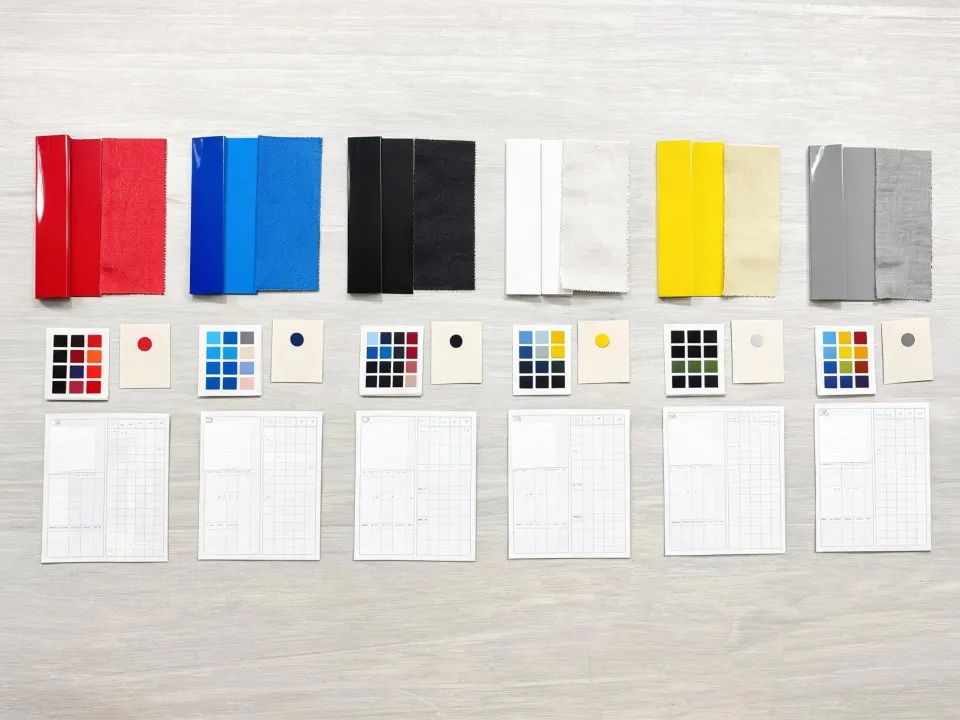
Approved print samples paired with settings records
After the fit brief

One finished reference is tied to its print and finishing record.

Application fit, not generic claims

Mutoh Application Fit Planner

Compare production routes by the work they require before, during and after printing. The planner is a scoping aid; it does not calculate machine speed, cost, durability or compatibility without model-specific documentation and a controlled sample.

Frame the Test

Scope the production burden

Count the gates around the print pass

A faster print mode can be useful, yet sellable output may be constrained by preparation, drying, curing, transfer, lamination, cutting or inspection. Move the controls to describe one job. The result reports process complexity, not a productivity promise.

Two trade-offs to make explicit

Speed versus finish readiness: higher carriage speed does not reduce an outgassing or curing interval. One profile versus media-specific control: fewer profiles simplify operation, while a qualified material-specific route can reduce uncertainty when coating and white-point vary.

Suggested qualification records5

Create a separate record for every identified material route, finishing route and shift handoff.

This count is a planning prompt. It excludes machine capacity, ink cost, labor rate, waste, service coverage and commercial pricing.

Environment

Record temperature and humidity at the test.

Method

Use the same file, identified material and finishing route.

Data

Archive nozzle check, settings, observations and result.

Repeat

Run again after a defined idle interval.

Controlled scenarios, not customer claims

Three ways the planner changes the question

These are reproducible qualification scenarios. They contain no anonymous testimonial, market statistic or invented performance result.

Scenario 01 / Roll graphics

Production mode looks faster; lamination still sets release time

Background: A sign team wants to compare two print modes for a laminated vinyl job. Process: It prints the same control file on the same identified media lot, records heater and environment, then applies the documented dwell and laminate sequence. Result: The team can compare finished banding, color, surface and contour-cut registration while treating the waiting interval as a separate production constraint.

  • Limit: one media lot does not establish compatibility with every vinyl.
  • Release evidence: finished sample plus settings and dwell record.
Scenario 02 / Rigid UV

Visual cure and handling adhesion answer different questions

Background: A fabricator needs layered ink on acrylic and coated metal. Process: It documents cleaning, primer policy, fixture, layer order and cure setting, then performs the agreed adhesion and scratch checks after a defined dwell. Result: The route separates appearance from handling performance and reveals whether surface preparation or layer configuration requires another controlled run.

  • Limit: a workshop check is not a substitute for a regulated test standard.
  • Release evidence: labeled coupons, fixture record and adhesion result.
Scenario 03 / Textile transfer

Carrier-paper color is not the approval state

Background: A textile producer is balancing ink load, transfer consistency and fabric hand. Process: It identifies paper and fabric lots, records temperature, dwell and pressure, transfers the same target twice and reviews the fabric under the agreed light. Result: The team can compare post-transfer density, bleed, dimensional change and repeatability without turning the untransferred sheet into a false color reference.

  • Limit: wash or rub performance depends on the complete material and transfer route.
  • Release evidence: transferred reference, press record and repeat sample.

Convert the result into a brief

Request a model-specific application review

Include the exact material or part, finished size, artwork characteristics, monthly volume, post-print operations, environment and acceptance method. A dealer or application team can then confirm which questions require a current datasheet, a physical sample or a service discussion.

  • No unverified compatibility assumption
  • No anonymous production claim
  • No replacement for regional specifications

By submitting, you acknowledge the Privacy Policy. Do not include confidential artwork or personal production data.